Hot water system plays a bigger role in your home’s energy use than most people realise. In fact, hot water heating often accounts for about 20 to 30 percent of a typical Australian household’s energy bill
Source: https://www.energy.gov.au/households/hot-water-systems
When your system starts struggling, running cold, or costing more than usual, efficiency becomes the first thing homeowners look at. The challenge is that “efficiency” isn’t the same for every home. Queensland’s warm climate, water quality, roof layout, and household size all change how well a system performs.
As a multi-trade team working across Brisbane, the Sunshine Coast, and the Gold Coast, we install, service, and repair hot water systems every week. This guide blends field experience with reputable studies so you can make the most informed decision possible.
Short Answer: Heat Pump Hot Water Systems Are the Most Efficient for Most Homes
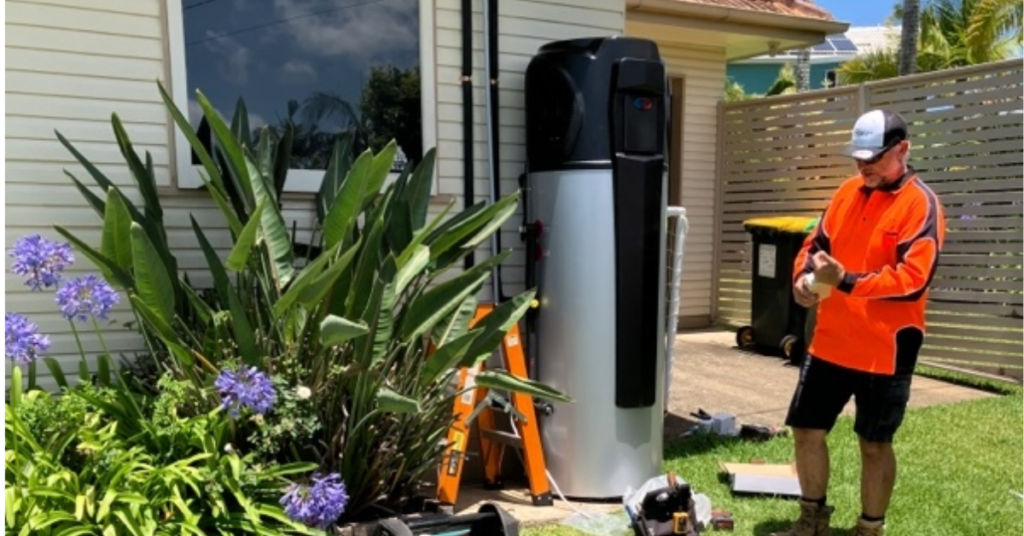
Based on both government data and what we see on-site each week, heat pump hot water systems are the most efficient and cost-effective choice for most Queensland homes.
Heat pumps use up to 70 percent less energy than traditional electric systems
Source: https://www.energy.gov.au/households/heat-pump-hot-water-systems
Solar hot water systems can outperform them long-term but only when the home has the right roof angle, low shading, and strong sun exposure.
Understanding Hot Water Efficiency (Explained Simply)
A hot water system is “efficient” if it:
- Uses as little energy as possible
- Heats water quickly
- Maintains performance over time
- Reduces running costs
Efficiency is influenced by several factors, including climate. Queensland homes benefit from heat pump and solar technology because warm ambient temperatures and strong sunlight directly improve performance
Study: Science Direct
Efficiency Rankings: From Most Efficient to Least Efficient
Below is a ranking based on real-world performance, Queensland climate conditions, and studies from CSIRO, Energy.gov.au, and ARENA.
- Heat Pump Hot Water Systems (Most Efficient Overall)
A heat pump draws heat from the surrounding air instead of generating heat directly. This process delivers three to four units of heat output for every unit of electricity consumed, known as the Coefficient of Performance (COP)
Source : Greenlight Energy Solutions
- Pros and Cons of Heat Pumps
| Pros | Cons |
| Extremely efficient in warm climates like Queensland | May be louder than conventional systems |
| Up to 70 percent lower running costs | Requires good ventilation |
| Works day and night | Higher upfront cost |
| Eligible for rebates | Performance can drop slightly in very cold weather |
- Solar Hot Water Systems
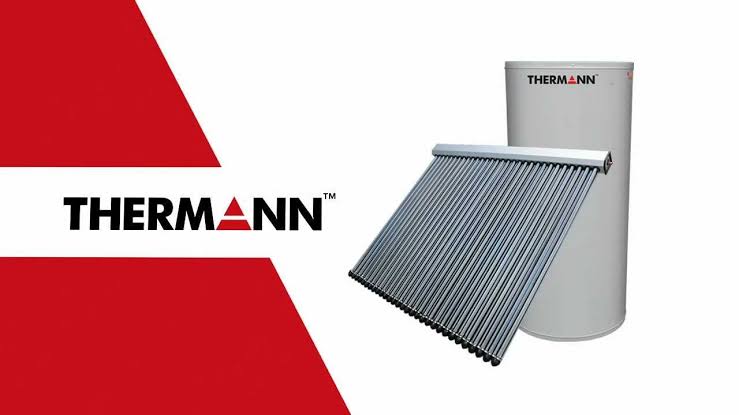
Solar systems use roof-mounted collectors to heat water using the sun’s energy. ARENA reports that solar hot water can reduce energy use by 50 to 90 percent depending on location and system design
Source: Hogan Hot water and airconditioning
Pros and Cons of Solar Hot Water
| Pros | Cons |
| Very low running cost | Higher upfront installation cost |
| Best long-term savings | Needs correct roof orientation (north-facing ideal) |
| Excellent performance in sunny Queensland | May require electric or gas booster |
| Environmentally friendly | Shading from trees or buildings reduces efficiency |
- Instantaneous Gas Hot Water Systems
Instantaneous gas systems heat water only when needed. The Australian Energy Rating program highlights that they have minimal standby heat loss, improving their efficiency
Source: Australian Energy
Pros and Cons of Gas Instant Systems
| Pros | Cons |
| No heat loss from storage tank | Requires natural gas supply or LPG |
| Delivers hot water on demand | Running cost varies with gas prices |
| Compact design | Emissions higher than solar or heat pump |
| Reliable performance | Not as energy-efficient as heat pumps or solar |
4. Electric Storage Hot Water Systems (Least Efficient)
Electric storage tanks are reliable but operate at lower efficiency due to constant heat loss. Energy Consumers Australia identifies them as one of the highest energy users in the home
Source; sustainability victoria
- Pros and Cons of Electric Storage
| Pros | Cons |
| Lowest upfront cost | Highest running cost |
| Easy to install and replace | Heat loss during storage |
| Works in any weather | Not environmentally friendly |
| Simple technology | Shorter lifespan affecting long-term efficiency |
Running Cost Comparison (Queensland 2025)
Based on Energy.gov.au and the Alternative Technology Association:
- Heat Pump: $200–$400 per year
Source: https://www.energy.gov.au/households/heat-pump-hot-water-systems - Solar: $150–$350 per year
- Instant Gas: $400–$650 per year
- Electric Storage: $800–$1,100 per year
How to Choose the Most Efficient System for Your Home
Heat Pump is best for:
- Most Queensland households
- Lower running costs
- Homes without ideal solar roof conditions
Solar is best for:
- Homes with strong sun exposure
- North-facing roofs
- Long-term cost savings
Gas is best for:
- Homes with existing gas connections
- Consistent hot water use
Electric is best for:
- Budget-conscious installations (short-term)
How to Know When Your System Is Losing Efficiency
Common signs include:
- Hot water running out faster
- Higher electricity bills
- Sediment buildup
- Temperature fluctuations
Research also shows that aging tanks lose efficiency as insulation degrades
Source: ASCE
Final Takeaway
Heat pumps are the most efficient hot water systems for most Queensland homes due to their strong performance in warm conditions and significantly lower running costs. Solar is a close contender when the home has ideal roof conditions.
The best choice depends on your home’s layout, water usage, and long-term goals.
Need Help Choosing the Right System?
LiVE Services Group has licensed electricians, plumbers, gas fitters, and hot water specialists ready to assist across Brisbane, Sunshine Coast, and Gold Coast.
Call 1800 548 332 to book a trusted hot water assessment