Hot Water system Written by a Senior Plumber & Gas Fitter — LiVE Services Group, QLD
Hot water system issues always seem to strike at the worst possible time — mid-shower, when someone’s rushing out the door, or right when the kids need baths. After working in thousands of Queensland homes across the Sunshine Coast, Brisbane and the Gold Coast, I can say one thing with confidence:
Most hot water problems don’t appear out of nowhere.
They almost always start with small warning signs people overlook.
This guide walks you through the three most common hot water system problems we see across Queensland. You’ll learn:
-
What causes the issue
-
Early signs to watch for
-
Safe checks you can do at home
-
When it’s time to call a licensed technician
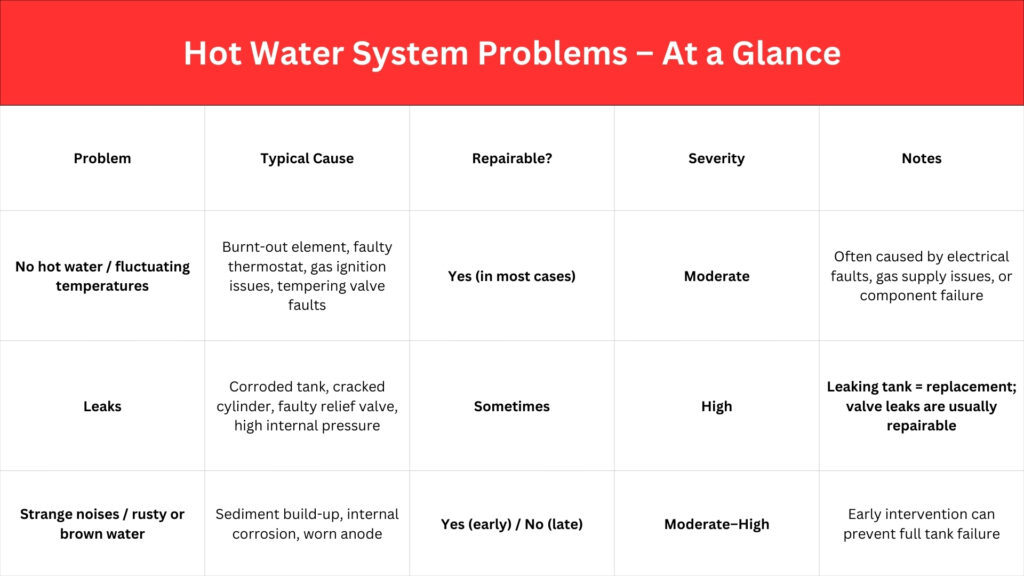
Before we dive into the details, here’s a quick at-a-glance comparison to help you understand which problems are usually repairable — and which often mean replacement.
Why Hot Water Systems Fail More Often in Queensland Homes
Hard water with mineral buildup, coastal humidity, storm-related power surges and ageing homes all make Queensland one of the tougher places for hot water systems. Water chemistry, temperature swings and heavy usage all contribute to faster wear and tear.
Research shows that sediment accumulation, corrosion and temperature mismanagement are the leading causes of system failure in storage tanks.
Sources:
Problem 1: No Hot Water or Sudden Temperature Fluctuations
One day everything is working perfectly — and the next, the shower turns cold halfway through. This is the most common hot water issue seen in Queensland homes
Early Signs Most Homeowners Notice
These symptoms often appear before the system fails completely:
- Hot water running out faster than normal
- Slow reheating times
- Pilot light going out intermittently (gas systems)
- Hot water temperature fluctuating during showers
Inconsistent temperature at different taps
Typical Causes
Several parts of the system may be failing:
- Burnt-out electric element – results in partial or no heating
- Faulty thermostat – incorrect or unstable temperature control
- Sediment build-up inside the tank – reduces heating efficiency
- Gas ignition issues – flame failure, blocked jets, or faulty igniters
- Faulty tempering valve – causes sudden hot–cold temperature swings
Most of these issues worsen over time and won’t fix themselves.
Safe At-Home Checks
Homeowners can safely rule out basic problems by checking:
- Resetting the breaker or power supply
- Confirming gas supply is on (LPG or natural gas)
- Checking whether the pilot light is lit
- Doing a quick visual inspection of accessible valves and pipes
If these checks don’t solve the issue, the system likely needs professional attention.
Speak With A Local Hot Water Technician Today!
Stop playing charades with your ancient hot water system and give a shout to our local hot water technician today. They’re more reliable than a fortune teller at a county fair! They’ll provide an experienced perspective on how long do hot water systems last and offer technical knowledge about different types of heating methods like gas water heater or electrical hot water.
Here are some key points to consider:
-
- Most hot water systems are designed to last between 8-12 years but regular maintenance can extend this lifetime.
-
- If you frequently need hot water, an instant hot water system might serve you best.
-
- Your choice between an electric or gas-fired system could impact the lifespan of your water tank.
Don’t gamble with your comfort, consult a local expert today contact Live Service Group